

Downspout Installation & Replacement in San Marcos, CA: A Homeowner's Guide
September 23, 2026
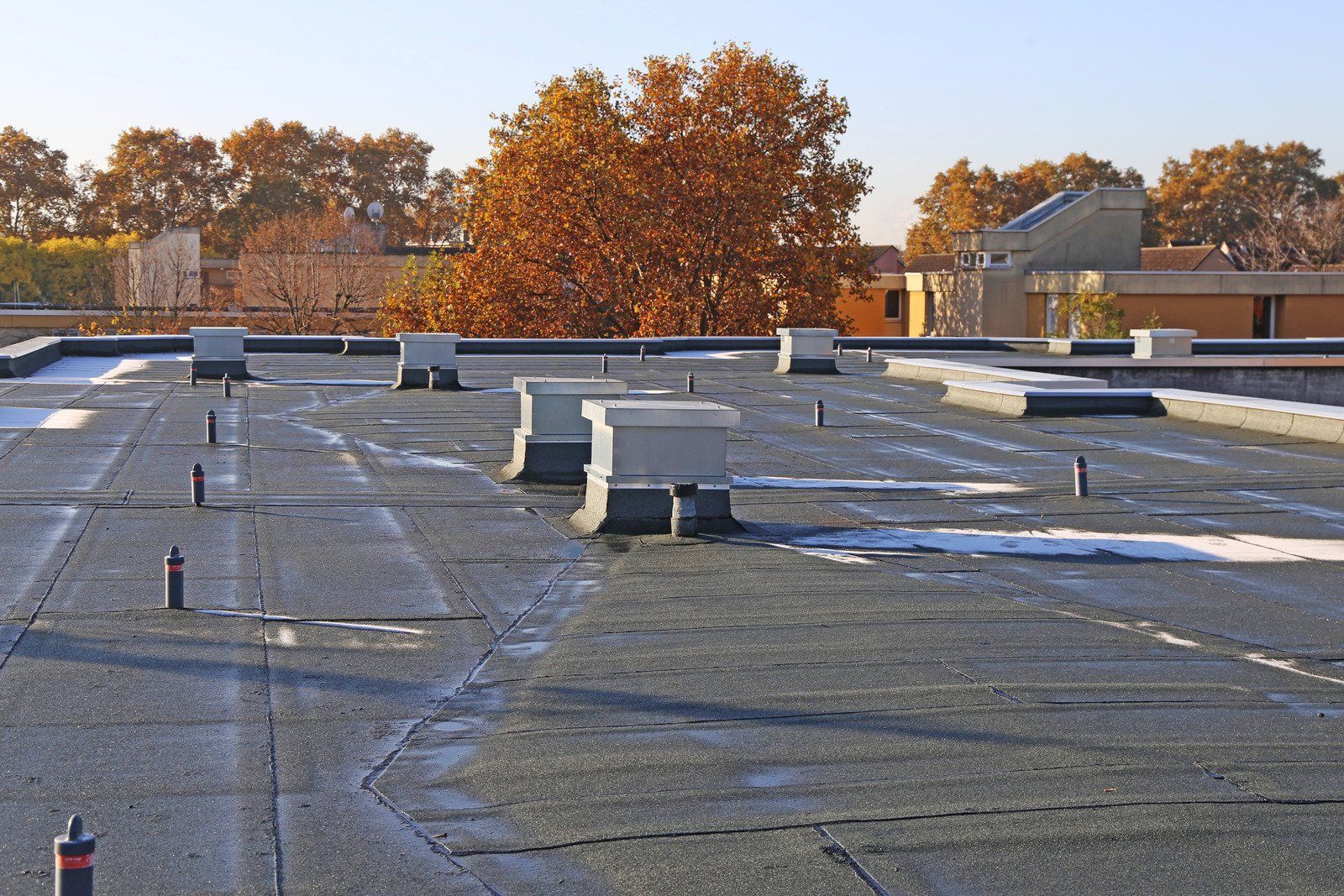
WARNING: A flat roof installed over damp insulation, or without correcting an existing low spot, can look complete and still fail within a year or two. If a contractor skips the moisture scan or the tear-off and offers to build over the old roof to save time, that shortcut shows up later as a leak. It's not saving.
Quick Answer: Downspouts move water off the roof, but if they're undersized, poorly placed, or discharging too close to the house, they can contribute to the exact problems they're meant to prevent. As a general rule, one downspout handles roughly 400 to 800 square feet of roof area, and most gutter runs need a downspout every 30 to 40 feet to keep pace with heavy runoff. Water leaving the downspout should land at least three to four feet from the foundation on sloped ground, and further on flat ground. In San Marcos and the surrounding North County San Diego area, homes deal with a handful of intense winter storms rather than steady year-round rain, which makes correct downspout sizing and placement especially important.
A January storm rolling in off the Pacific can drop more rain on a San Marcos rooftop in a single afternoon than the region sees across an entire ordinary month. All of that water has to go somewhere, and on most homes the job of moving it away from the house falls to a handful of downspouts running from roofline to ground. When those downspouts are undersized, poorly placed, or set too close to the foundation, the water they're supposed to control ends up working against the house instead, softening soil, pooling near the slab, and pushing moisture toward the crawl space.
Downspout installation is often treated as an afterthought to gutter work, but the two systems only function as a pair. A gutter that channels water perfectly along the roofline accomplishes little if the downspout beneath it is too small for the roof area it serves, or discharges the water two feet from the wall it was supposed to protect.
Why Downspout Sizing Changes the Whole Drainage Picture
Roof Area Drives Downspout Count
Roof size influences downspout requirements, with common guidance suggesting one downspout per 400 to 800 square feet. Steeper roofs need more drainage capacity because they shed water faster. Larger San Marcos homes may require four or more strategically positioned downspouts.
Gutter Run Length Matters As Much As Roof Area
Gutter length also determines downspout placement. Professionals commonly recommend one downspout every 30 to 40 feet, preventing water from traveling excessive distances horizontally. Long, uninterrupted gutter runs may therefore require additional downspouts beyond what roof-area calculations alone indicate.
Downspout Size Itself Is Not One Size Fits All
Downspout dimensions should match the roof section and expected water volume. Standard 2x3-inch downspouts suit smaller areas, while larger or steeper roofs generally benefit from 3x4-inch downspouts. The larger profile can handle approximately twice the water volume.
Getting Water Far Enough From the Foundation
This is the step that most separates a properly installed downspout system from one that quietly damages a home over time. Water discharged from a downspout needs distance, and ideally a slope that carries it further away rather than back toward the wall.
Minimum Distance Depends On The Ground
On sloped ground, directing water three to four feet from the foundation is often sufficient because gravity encourages runoff to continue moving away. Flat ground needs longer extensions because water can remain near the foundation instead of naturally draining outward.
Splash Blocks And Extensions Do Different Jobs
Splash blocks prevent falling water from eroding soil beneath downspouts, while rigid or flexible extensions carry runoff farther from the foundation. Using both can provide better protection, with the splash block positioned where extended water finally reaches the ground.
TIP: Walk the yard during or right after a heavy rain and watch where each downspout is actually sending water. Extensions shift over time, especially in yards with foot traffic or landscaping changes, and a discharge point that worked when the system was installed can end up sending water straight back toward the foundation years later.
Signs a Downspout Needs Replacing, Not Just Cleaning
Separated Seams And Popped Fasteners
Downspout seams can separate, while loose brackets allow sections to pull away from the wall. These failures redirect water behind the system, causing leaks along exterior walls instead of proper drainage.
Visible Rust-Through Or Soft Spots
Steel downspouts with severe internal rust eventually develop weak areas and holes. Once corrosion breaks through the metal, patches rarely provide lasting protection, and repeated storms continue expanding the damaged sections.
Water Marks Or Mineral Staining At The Base Of The Foundation
White mineral deposits or dark staining near a downspout outlet can indicate prolonged water exposure. These marks often suggest runoff has been discharging too close to the foundation, even when components appear intact.
Pooling That Shows Up At The Same Spot Every Storm
Persistent standing water near a downspout usually indicates poor discharge placement or an inadequate extension. If pooling returns after every storm, changing the outlet location may solve the drainage problem.
Choosing Materials for Southern California Homes
San Marcos and the surrounding North County San Diego area, including Escondido, Vista, Carlsbad, Oceanside, Encinitas, Solana Beach, and Del Mar, see a mix of inland heat, coastal humidity, and a handful of intense winter storms rather than sustained rainfall throughout the year. That combination shapes which downspout materials hold up best over time.
Aluminum resists corrosion well in both inland and coastal conditions, holds up under UV exposure, and remains the most common choice for residential downspouts across the region.
Copper develops a protective patina over time and can outlast aluminum by decades, which appeals to homeowners planning to stay in a property long-term or matching an existing copper roof or gutter system.
Vinyl
downspouts hold up in mild climates but tend to become brittle faster under intense inland sun, making them a less durable choice for the hotter pockets of North County.
What Professional Downspout Installation Involves
Assessing The Existing Roofline And Gutter System
Every downspout decision begins by evaluating roof area, gutter capacity, and natural water flow across the roof to determine effective drainage needs.
Selecting Placement Based On Grading, Not Just Gutter Corners
Corners offer convenient placement, but downspouts work best where grading directs water away. Sometimes extending along the wall provides better drainage and foundation protection.
Sealing Every Joint And Securing Every Bracket
Reliable downspouts require sealed seams and firmly secured brackets. Careful installation prevents gaps, loose connections, and common failures that can disrupt proper water flow.
Confirming Discharge Points Before Finishing The Job
A properly positioned downspout should discharge water away from the foundation. Testing the system with a hose confirms water reaches the intended location safely.
Quick Answer: A proper flat roof installation starts with a full tear-off and deck inspection, not just a new membrane laid over the old one. From there, the crew corrects the slope with tapered insulation so water actually reaches the drains, installs a membrane suited to the climate (TPO, EPDM, or modified bitumen), heat-welds or seals every seam, and flashes every penetration and parapet edge before final inspection. A residential flat roof section, like a patio cover or garage addition, typically takes a few days from tear-off to final walkthrough. A commercial roof spans a much larger area and can take one to several weeks depending on size and rooftop equipment.
If your patio cover roof has been patched three times in five years and keeps failing in a new spot each time, the membrane underneath is worn out. That's usually the real story, not one bad patch job. Last winter's rain probably left a brown ring on the ceiling below to prove it. Once a flat roof starts failing in new places instead of the same old spot, the question changes. It's no longer "how do we fix this section." It's "what does replacing the whole thing actually involve."
Flat and low-slope roofs cover patio additions, garages, ADUs, and full commercial buildings all over North County San Diego. The design is efficient, and it's practical for a lot of building types. But flat roofing fails differently than a pitched shingle or tile roof does, and a rushed installation shows up as a leak in a few years instead of holding for decades. Here's what a flat roof job looks like when it's done right, start to finish.
Frequently Asked Questions
How do I know if my downspouts need extensions instead of full replacement?
If the downspouts themselves are structurally sound, free of rust-through, and properly attached, but water is landing too close to the foundation, an extension or splash block often solves the problem without replacing the downspout itself. Replacement becomes necessary once seams separate, brackets fail repeatedly, or rust has compromised the metal.
What size downspout does a typical San Marcos home need?
Most single-story homes with moderate roof area do well with a 2x3 inch downspout, while larger homes, steeper roofs, or homes with long gutter runs typically need a 3x4 inch downspout to keep pace with runoff during a strong winter storm. An assessment of roof area and gutter length determines the right size for a specific home.
Can downspout water be routed underground instead of onto the yard?
Yes. An underground drain line can carry water from the base of a downspout to a discharge point well away from the house, which works well on flat properties or where surface extensions would run across walkways or landscaping.
How often should downspouts be inspected?
Twice a year, generally before and after the winter rain season, is typical for North County San Diego homes. Inspections after any major storm are also worthwhile, since heavy rain is when loose brackets, separated seams, and shifted extensions tend to reveal themselves.
Do gutter guards affect downspout performance?
Gutter guards reduce the debris that reaches the downspout opening, which lowers the chance of a clog at the transition point between gutter and downspout. They don't change how far water needs to travel once it exits the downspout, so extension length and discharge placement still matter with or without guards.
Why does downspout placement matter more in San Marcos than in areas with steady rainfall?
North County San Diego gets much of its annual rain in a handful of concentrated winter storms rather than spread evenly across the year. That means a downspout only gets tested at full capacity a few times each year, and a placement or sizing mistake can go unnoticed for months until one of those storms exposes it all at once.
What Reliable Downspouts Mean For San Marcos Homes
Downspouts rarely get credit when a home stays dry through a hard winter storm, yet they do most of the quiet work that keeps water away from places it could damage. Getting the count right, matching pipe size to roof area, and choosing a discharge point that clears the foundation are what separate a system that holds up for years from one that needs attention every season. Get the sizing and placement right, and the drainage system rarely gives a home any trouble.
Protecta Roofing Inc.
has spent 25
years working on
roofs and gutters
across San Marcos and the wider North County San Diego area, and downspouts get the same care as any other part of that system. A house built on solid drainage rarely announces itself, since nothing ever goes wrong. That quiet reliability is what a well placed downspout is actually built to deliver, storm after storm, year after year. It's the kind of work that goes unnoticed exactly because it was done right.