

Replacing an Aging Flat Roof? What a Proper Installation Actually Involves
July 31, 2026
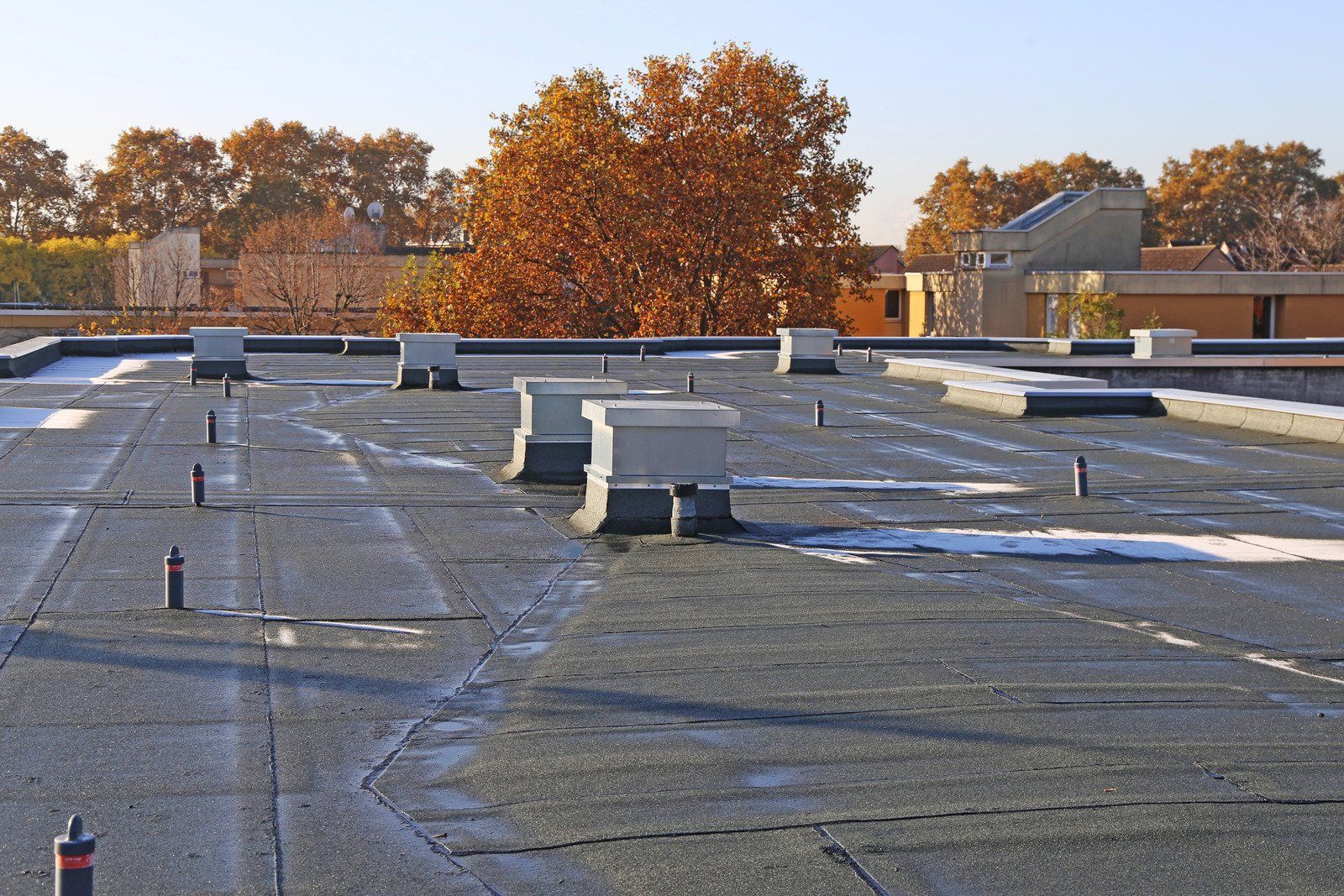
Quick Answer: A proper flat roof installation starts with a full tear-off and deck inspection, not just a new membrane laid over the old one. From there, the crew corrects the slope with tapered insulation so water actually reaches the drains, installs a membrane suited to the climate (TPO, EPDM, or modified bitumen), heat-welds or seals every seam, and flashes every penetration and parapet edge before final inspection. A residential flat roof section, like a patio cover or garage addition, typically takes a few days from tear-off to final walkthrough. A commercial roof spans a much larger area and can take one to several weeks depending on size and rooftop equipment.
If your patio cover roof has been patched three times in five years and keeps failing in a new spot each time, the membrane underneath is worn out. That's usually the real story, not one bad patch job. Last winter's rain probably left a brown ring on the ceiling below to prove it. Once a flat roof starts failing in new places instead of the same old spot, the question changes. It's no longer "how do we fix this section." It's "what does replacing the whole thing actually involve."
Flat and low-slope roofs cover patio additions, garages, ADUs, and full commercial buildings all over North County San Diego. The design is efficient, and it's practical for a lot of building types. But flat roofing fails differently than a pitched shingle or tile roof does, and a rushed installation shows up as a leak in a few years instead of holding for decades. Here's what a flat roof job looks like when it's done right, start to finish.
What Happens Before Anyone Touches the Old Roof
A flat roof installation that actually lasts starts with an honest look underneath the surface, before a single piece of the old system comes off.
Deck and structure inspection
The crew checks the condition of the roof deck itself, whether that's plywood, OSB, or a concrete substrate on a commercial building. Rot. Delamination. Rust on a metal deck. Any of it changes what happens next, and none of it is visible until the old membrane and insulation get pulled back.
Moisture scanning
Flat roofs trap water differently than a sloped roof does. A moisture scan of the existing insulation and deck picks up spots that have been quietly wet under the membrane, sometimes for years, with no interior leak to give it away yet. Install new roofing directly over wet insulation and that moisture is trapped for good. It's a guaranteed early failure.
Slope and drainage evaluation
Despite the name, a flat roof isn't actually flat. Codes and manufacturer specs call for a minimum slope, typically around a quarter inch of drop per horizontal foot, so water heads toward drains, scuppers, or gutters instead of sitting there. A roof that was built with too little slope, or one that's settled unevenly over the years, gets corrected during a real installation. It doesn't just get covered up again.
Tear-Off Versus Building Over the Old Roof
Some contractors will offer to lay a new membrane right over the existing one to save time. On a flat roof, that shortcut carries more risk than it does on a pitched roof, because trapped moisture and existing damage have nowhere to go and no way to dry out under a sealed membrane.
A full tear-off strips the old membrane, insulation, and flashing down to the deck. It's also the only real chance to catch deck rot, rusted fasteners, or structural sagging before it all gets sealed under a new roof for another 20-plus years. Between the marine-layer humidity and the long dry stretches typical along this coast, a deck that looks fine at a glance can still be holding onto moisture from a slow leak that never fully dried out between rain events.
Choosing a Membrane for a Sunny, Salt-Air Climate
The membrane does the actual waterproofing, and the three systems most common on residential and commercial flat roofs here hold up differently under intense sun, salt air, and a long dry season that gives way to concentrated winter rain.
TPO (thermoplastic polyolefin)
A single-ply membrane, usually a reflective white or light color, with seams heat-welded into a bond as strong as the membrane itself when the crew does it right. The reflective surface earns its keep here: cool-roof membranes that meet ENERGY STAR reflectivity standards can meaningfully cut a building's cooling-related energy use during the hottest stretch of summer, which matters on a roof taking direct North County sun most of the day.
EPDM (rubber membrane)
A synthetic rubber system with a long track record and real flexibility across temperature swings, well suited to the shift from cool marine mornings to hot inland afternoons. Seams get bonded with tape or liquid adhesive instead of heat-welded, so prep and adhesion technique matter just as much as the material itself.
Modified bitumen
An asphalt-based membrane reinforced with polymers, installed in layers and applied by torch, cold adhesive, or hot mop. It holds up well under foot traffic and rooftop equipment, which is why it shows up often on commercial roofs with HVAC units or regular maintenance access. Torch-applied work needs a crew trained specifically in that method — open flame near a roof deck isn't something to hand off to whoever's cheapest.
No single membrane wins for every building. The right pick depends on the roof's slope, how much foot traffic it takes, whether it's residential or commercial, and what's already proven itself on similar roofs nearby.
Insulation and Slope: The Layers Nobody Sees Again
Once the deck is clean and dry, insulation goes down before the membrane does. On most modern flat roofs, that's rigid foam board, often tapered so the boards run thicker in some spots and thinner in others, building the slope right into the roof instead of relying on the deck's original pitch. This is the point where a roof that's pooled water in the past actually gets fixed at the source, rather than getting a new membrane laid over the same low spot that caused the problem the first time.
The insulation layer earns its cost twice over. A properly insulated flat roof keeps conditioned air where it belongs, which counts for something on a roof that spends long summer days soaking up direct sun with barely a cloud to interrupt it.
Seams and Flashing: Where Flat Roofs Actually Fail
The flat field of the membrane rarely fails on its own. Leaks almost always start at a seam, a penetration, or a transition point. That's why this stage gets the most attention from a crew that's done this before.
Every roof penetration — vents, drains, skylights, HVAC curbs, and the parapet walls common on commercial buildings — gets flashed one at a time, with the membrane turned up and sealed against the vertical surface rather than just butted against it. Seams between sheets get heat-welded, taped, or torched depending on the material. A good installer probe-tests those seams instead of eyeballing a weld and calling it done.
TIP: If a flat roof replacement is on the calendar, scheduling it for the dry late-summer or early-fall stretch, before the first real rain, gives the crew a full weather window to finish tear-off, drying, and membrane installation without a storm interrupting an exposed deck.
What a Reputable Installer Documents Before Leaving
A finished flat roof installation is more than a clean-looking surface. Before the crew packs up, a thorough job includes a full walkthrough of the membrane, seams, and flashing; confirmation that water actually reaches the drains during a hose or rain test; and photos of the completed work. Both a workmanship warranty from the installer and a manufacturer's material warranty should show up in writing — not get promised out loud and forgotten by the time the invoice arrives.
WARNING: A flat roof installed over damp insulation, or without correcting an existing low spot, can look complete and still fail within a year or two. If a contractor skips the moisture scan or the tear-off and offers to build over the old roof to save time, that shortcut shows up later as a leak. It's not saving.
Residential Versus Commercial Flat Roof Installation
A residential flat roof section — a patio cover, a garage, an ADU, a single-story addition — is usually contained enough that a crew can tear off, prep, and finish in a matter of days. Commercial flat roofs cover a lot more ground, often carry multiple HVAC curbs, roof drains, and parapet details, and sometimes need to be scheduled around business hours or phased across sections so the building stays open. The fundamentals don't change between the two: deck inspection, tear-off, slope correction, membrane selection, sealed seams and flashing. What changes is scale and scheduling.
Frequently Asked Questions
How long does flat roof installation take on a home addition or garage?
A few days, usually, from tear-off to completed membrane and flashing. Larger sections or roofs with extensive flashing work take longer to complete.
Can a new flat roof go over the existing one, or does it need a full tear-off?
A full tear-off is more reliable, since it's the only way to inspect the deck and catch trapped moisture before it's sealed under a new membrane.
Which flat roofing material handles intense summer sun best?
Reflective, white-surfaced membranes like TPO reduce heat absorption and lower cooling costs. EPDM and modified bitumen can also perform well with the right coatings or lighter cap sheets.
Do flat roofs actually have any slope at all?
Yes. A properly built flat roof includes a minimum slope, often built into tapered insulation, so water moves toward drains instead of sitting on the surface.
What causes most leaks in a flat roof after it's been installed?
Seams, flashing around penetrations, and parapet transitions — almost never the open field of the membrane itself. That's why seam sealing gets the most attention.
How soon can a flat roof handle regular foot traffic, like HVAC servicing?
Once the membrane is fully cured and seams are complete, most systems handle normal foot traffic without issue. Some get tougher membranes or walkway pads built in.
A Roof System Built to Actually Last
A flat roof installed correctly the first time — deck inspected, slope corrected, every seam and flashing detail sealed — holds up for two decades or more. The steps that get skipped to shave a few days off the schedule are almost always the ones that turn into a leak a year or two later. And on a flat roof, there's nowhere for that water to go but in, which is exactly why the tear-off and inspection stage matters as much as the membrane itself.
Protecta Roofing Inc. brings more than 25 years of experience to flat roof work throughout San Marcos, California, walking the deck and checking for trapped moisture before recommending anything. Whether it's a patio cover that's been patched three times or a commercial roof nearing the end of its service life, the same fundamentals apply: correct the slope, choose the right membrane, and seal every seam and penetration properly. That's what makes the difference between a roof that lasts and one that fails quietly.