

Flat Roof Materials Compared: TPO, EPDM, and Modified Bitumen for San Marcos Properties
October 16, 2026
WARNING: A flat roof installed over damp insulation, or without correcting an existing low spot, can look complete and still fail within a year or two. If a contractor skips the moisture scan or the tear-off and offers to build over the old roof to save time, that shortcut shows up later as a leak. It's not saving.
After the first real storm of the season, a building owner climbs a ladder to check the low-slope roof over a back addition and finds a shallow pool of water near the center, days after the rain stopped. From the ground the membrane looked fine. That standing water is the first clue that the roofing system, or the way it was installed, never gave the water a clear place to go.
Flat roofs across North County San Diego are usually built with one of three systems: TPO, EPDM, or modified bitumen. The right one depends on your budget, how long you want the roof to last, how much foot traffic it carries, and California's cool roof rules. TPO and EPDM single-ply membranes commonly last 20 to 30 years, while modified bitumen lasts about 15 to 25. Material matters, but drainage and installation quality decide how long any flat roof truly holds up.
Why a Flat Roof Behaves Differently Than a Sloped One
A flat roof is almost never perfectly flat. Builders and inspectors call these low-slope roofs, defined as any roof with a pitch under 3 inches of rise for every 12 inches of run. Because water cannot run off quickly the way it does on a steep roof, the entire surface has to be watertight, and it has to be nudged toward drains with a gentle, deliberate slope.
Building codes set that slope for a reason. The International Building Code calls for a minimum finished slope of about a quarter inch per foot, roughly a 2 percent grade, so water moves toward drains or scuppers instead of sitting in place. When a roof is reroofed and the framing cannot be changed, code allows a shallower slope as long as the roof still drains. Standing water, often called ponding, is the enemy of any flat roof. It adds weight, speeds up wear on the membrane, collects dirt and growth, and can void a manufacturer warranty.
This is why material choice and installation cannot be separated. A top-tier membrane installed over a surface that holds water will fail early, while a modest membrane over a well-sloped, well-drained deck can serve for decades. Every flat roof that lasts starts with a plan for where the water goes.
The Three Flat Roof Systems Built Most Often in North County
Most low-slope roofs on homes and commercial buildings in the San Diego area use one of three proven systems. Each handles sun, heat, and occasional heavy rain differently, and each carries its own cost and lifespan.
TPO (thermoplastic polyolefin)
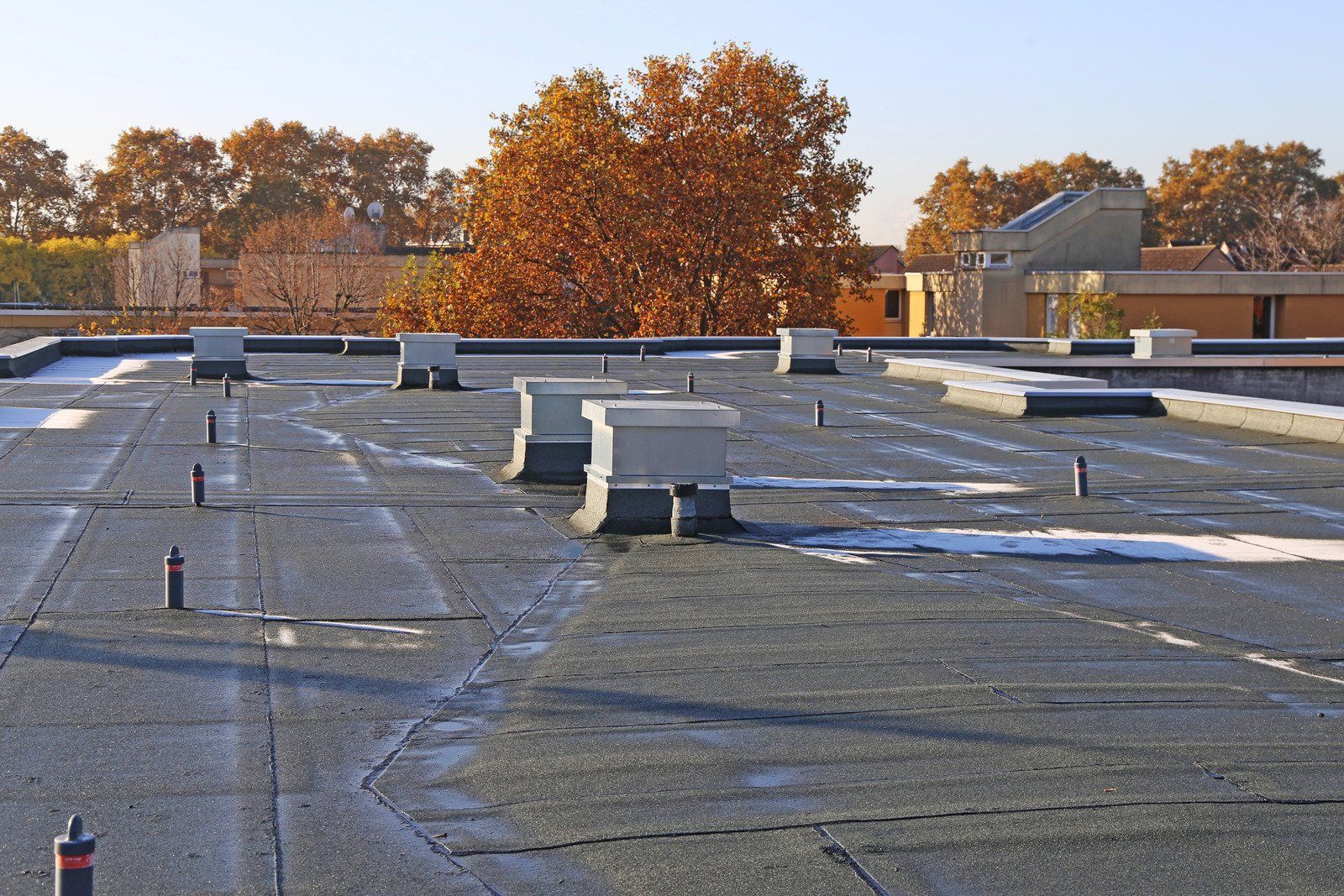
TPO is a single-ply membrane, usually bright white, that reflects sunlight and helps hold down cooling costs in a warm climate. Installed costs tend to run around 5 to 8.50 dollars per square foot, and a well-installed TPO roof commonly lasts 20 to 30 years. Its reflective surface makes it a frequent choice where energy performance matters.
EPDM (rubber membrane)
EPDM is a black synthetic rubber sheet that has protected low-slope roofs for decades. It is forgiving to install, resistant to weather and temperature swings, and often the most affordable single-ply option, with installed costs near 4 to 8 dollars per square foot and a lifespan of roughly 20 to 30 years. The tradeoff is color: a black surface absorbs heat rather than reflecting it.
Modified bitumen
Modified bitumen grew out of traditional built-up roofing. Instead of one sheet, it uses layers, a base sheet, a bitumen ply, and a mineral-surfaced cap sheet, which makes it tough against foot traffic. It typically lasts 15 to 25 years. It is also heavier than single-ply systems, and torch-applied versions carry a fire risk during installation, so the application method matters.
A note on PVC
PVC is a fourth single-ply option worth knowing. Like TPO, it is reflective and can last 20 to 30 years, with strong resistance to grease and chemicals. That makes it popular over restaurants and industrial spaces. It usually costs more than EPDM or TPO.
How California's Cool Roof Rules Shape Your Choice
In California, the roof you choose is partly a code decision. The state's Title 24 energy standards require many low-slope roofs to meet cool roof targets for solar reflectance and thermal emittance, measures of how much sunlight a surface bounces back and how well it releases absorbed heat. The goal is lower cooling demand across the state's hot climate zones.
For a property owner in the San Marcos area, this has a practical effect. When a qualifying roof is replaced, the new surface often has to meet those reflectance and emittance thresholds, and the requirement is commonly triggered once a set share of the roof area is redone. Reflective white membranes such as TPO and PVC are designed to satisfy these targets, while a darker system like black EPDM may need added insulation or a reflective coating to comply.
None of this means one material is always right. It means the cool roof rules belong in the conversation before installation, not as a surprise at inspection. A roofer familiar with local permitting can confirm which path keeps the project compliant while still fitting the building and the budget.
Where Flat Roofs Succeed or Fail: Drainage, Seams, and Flashing
Two flat roofs with the same membrane can age very differently, and the difference usually comes down to details rather than the product name.
Drainage Comes First
Before installing any membrane, ensure the roof slopes toward drains, scuppers, or gutters. Tapered insulation creates necessary slope and helps prevent ponding.
Seams Decide Watertightness
TPO and PVC seams are heat-welded, while EPDM uses adhesive and tape. Properly prepared, sealed seams prevent water intrusion and leaks.
Flashing Protects The Edges
Flashing seals transitions around parapet walls, vents, skylights, HVAC curbs, and roof edges. Proper integration with membranes helps prevent premature leaks.
Material choice sets the ceiling for how long a flat roof can last. Drainage, seams, and flashing decide how much of that potential you actually get.
Matching the System to Your Property
With the systems and the code in view, the choice gets easier when you weigh a few factors honestly.
Budget And Time Horizon
EPDM often offers the lowest upfront cost for simple residential low-slope roofs. TPO or PVC may justify higher costs through reflectivity and long-term ownership.
Building Use And Foot Traffic
Roofs with frequent foot traffic or rooftop equipment benefit from durable modified bitumen or thicker membranes. Residential roofs allow more flexibility when selecting materials.
Sun Exposure And Energy Goals
Reflective white membranes can reduce cooling costs in sunny North County and support Title 24 compliance. Shaded roofs may benefit less from reflectivity.
Chemical Or Grease Exposure
PVC performs well above kitchen exhausts and industrial processes because it resists grease and chemicals better than competing roofing membrane systems.
The most reliable way to choose is a roof inspection that measures the existing slope, checks the deck and drains, and factors in how the building is used. From there, the material almost selects itself.
Quick Answer: A proper flat roof installation starts with a full tear-off and deck inspection, not just a new membrane laid over the old one. From there, the crew corrects the slope with tapered insulation so water actually reaches the drains, installs a membrane suited to the climate (TPO, EPDM, or modified bitumen), heat-welds or seals every seam, and flashes every penetration and parapet edge before final inspection. A residential flat roof section, like a patio cover or garage addition, typically takes a few days from tear-off to final walkthrough. A commercial roof spans a much larger area and can take one to several weeks depending on size and rooftop equipment.
If your patio cover roof has been patched three times in five years and keeps failing in a new spot each time, the membrane underneath is worn out. That's usually the real story, not one bad patch job. Last winter's rain probably left a brown ring on the ceiling below to prove it. Once a flat roof starts failing in new places instead of the same old spot, the question changes. It's no longer "how do we fix this section." It's "what does replacing the whole thing actually involve."
Flat and low-slope roofs cover patio additions, garages, ADUs, and full commercial buildings all over North County San Diego. The design is efficient, and it's practical for a lot of building types. But flat roofing fails differently than a pitched shingle or tile roof does, and a rushed installation shows up as a leak in a few years instead of holding for decades. Here's what a flat roof job looks like when it's done right, start to finish.
Frequently Asked Questions
How long does a flat roof last in Southern California?
Most single-ply flat roofs, including TPO and EPDM, last 20 to 30 years here, while modified bitumen runs about 15 to 25. Good drainage and regular inspections push every system toward the higher end.
Is TPO or EPDM better for a flat roof?
Neither wins outright. TPO reflects sunlight and suits warm, sunny climates, which lowers cooling costs. EPDM is forgiving to install and proven over decades. The better pick depends on your budget, building use, and color preference.
Can you install a new flat roof over an old one?
Sometimes. A single recover layer may be allowed if the deck is sound and local code permits it. Often, tearing off the old membrane is safer because it lets installers inspect and correct the drainage underneath.
Why does water pool on my flat roof?
Flat roofs are never truly flat. They need a slight slope, around a quarter inch per foot, toward drains. Pooling usually means the slope, drains, or tapered insulation were not set correctly, or debris is blocking flow.
Does a flat roof need to meet California cool roof rules?
In many cases, yes. California's Title 24 code requires qualifying low-slope roofs to use reflective cool roof materials when the roof is replaced. White membranes such as TPO and PVC are built to meet these thresholds.
How much does a flat roof cost per square foot?
Installed costs generally run about 4 to 14 dollars per square foot, depending on the system, roof size, and prep work. EPDM and modified bitumen sit at the lower end, while TPO and PVC trend higher.
Choosing a Flat Roof Built to Last
A flat roof is a system, not just a surface. The membrane you see gets the attention, but the slope beneath it, the quality of the seams, the flashing at every edge, and the drains that carry water away all decide how many years you get. Choosing between TPO, EPDM, and modified bitumen is really about matching a material to your building, your budget, and the way your roof sheds Southern California sun and winter rain.
Protecta Roofing Inc.
has worked on low-slope roofs across San Marcos, CA and the surrounding North County for more than 25
years, and the pattern holds on nearly every job: the roofs that last are the ones where the material was matched to the property and the water was given a clear path off the surface. When you understand how each system behaves, you can plan a flat roof that protects the building and holds its value for decades.